
When you travel, plastics multiply — in your cup lids, airplane trays, takeout boxes, even your receipts. This deep-dive guide shows you how to spot hidden exposures and swap them out with safer, road-ready alternatives. And as you make those swaps, I’ve tacked on a section on how to recycle/dispose of plastics as best we can.
Coffee, Hot Drinks & Straws
- Disposable cups: Even “paper” cups are lined with polyethylene plastic, which softens and sheds when exposed to heat.
- Plastic lids: Typically polypropylene or polystyrene. They begin to deform and leach at temperatures above 70 °C / 158 °F — well below boiling. Hot coffee or tea = risk zone.
- Travel mugs & thermoses:
- Many “stainless steel” mugs have plastic lids or sipping mechanisms where hot liquid passes over plastic before reaching your mouth.
- Some glass bottles also use plastic caps with interior plastic seals.
- Best choice: Mugs or bottles where only stainless steel, glass, and silicone touch fluids, while plastic components remain external (e.g., Hydro Flask, Klean Kanteen with stainless + silicone inserts).
- Straws:
- People often use straws to reduce teeth staining from coffee/tea.
- Avoid: Plastic straws — they deform with heat and shed microplastics.
- Better: Stainless steel or glass straws with silicone tips (protect lips from burns and teeth from chipping).
Bottom line: If it’s hot, never let it pass over plastic. Choose designs where plastic is structural, not fluid-contact.
Takeout & Microwaving
- Convenience store meals: Often microwaved in plastic trays or wraps → highest leaching with hot/oily foods.
- Swap:
- Transfer to glass/stainless container before heating.
- Consider electric lunchboxes with stainless interiors (12V car adapters or plug-in, available from brands like Travelisimo). These warm meals safely without plastic.
Cold Drinks & Office Fountains
- Paper cups with wax coating: Usually paraffin wax (safe for cold water). But hot liquids soften the wax, risk leaching, and wax can fragment.
- Better: Stainless or glass bottle at the fountain.
Travel Containers & Covers
- Beeswax wraps: Safe for wrapping cold/room-temp food.
- *** Not safe for microwaves: Wax melts and may smoke; never microwave.
- Microwave covers: Use glass microwave domes at home, but impractical for travel. On the road → heat only in glass/stainless.
Kettles & Coffee Filters
- Collapsible kettles: use folding electric kettles with stainless steel interiors (brands: Gourmia, Bodum Travel Kettle). Avoid silicone interiors if possible.
- Coffee filters: Bleached paper = no plastic, safe for hot. Unbleached paper or stainless mesh = best. Avoid single-serve plastic pods (K-cups, Nespresso).
Traveling with Pets
- Travel bowls: Avoid collapsible nylon/polyester bowls (shed fibers when wet).
- Better: Stainless steel travel bowls, or silicone collapsibles rated food-grade.
- Pet water bottles: Choose stainless with silicone spouts. Avoid squeezy plastic bottles with flip bowls.
Kids on the Road
- Sippy cups / bottles: Stick with tempered glass or stainless with silicone sleeves.
- Snacks: Pre-pack in stainless or silicone bags. Avoid pouches (polyethylene/aluminum composites).
- Entertainment: Bring fabric/felt toys or wooden blocks instead of plastic toys for long trips.
Thermal Paper (Receipts, Tickets)
- Where you’ll see it: Cash register receipts, boarding passes, luggage tags, food delivery slips, and even drink order labels (like those stuck onto coffee cups or thermoses).
- The issue: Thermal paper is often coated with BPA or BPS, both endocrine disruptors. These chemicals can transfer to skin on contact.
- Handling tips:
- Minimize direct contact; fold labels or receipts outward.
- Photograph receipts → decline the paper copy when possible.
- Wash hands with soap and water afterward.
- *** Avoid alcohol-based sanitizers after handling — they increase dermal absorption of BPA/BPS.
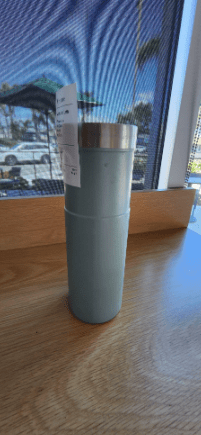
I was at a cafe for my matcha latte. Brought my own thermos–check; removed plastic lid–check; thermos has stainless steel rim–check, and then…….the barista placed the thermal paper label ON the drinking lip!
Sigh. Can’t win them all.
When Abroad
- Learn the local word for “no plastic bag” / “I have my own container.”
- In high-contamination regions:
- Use portable water filters (Grayl, Lifestraw Go).
- Buy larger sealed bottles → transfer to stainless/glass.
- Avoid street food served hot in plastic bags (common in SE Asia).
OCD Behavior Hack
“Heat, Acid, Oil = NO plastic.”
- Hot liquids, acidic drinks (coffee, tea, soda, citrus), and oily foods extract the most microplastics.
- Decision rule: If it’s one of the three, transfer to glass, stainless, or ceramic before eating/drinking.
Recycle & Dispose
Let’s just start with the bottom line on recycling: it’s mainly a scam. The complex chemical nature of plastics makes it hard and expensive to recycle. Since the 1980s the plastics industry has been marketing the recycling idea to get people to think that using plastics leads to a closed system of use and reuse. I never felt bad about using plastics because I thought that as long as I was conscientious about recycling them, I wasn’t contributing to the pollution problem. And yes, many a time in my younger years I’ve side-eyed someone for throwing their plastics into the regular trash instead of the recycling bin! (The arrogance of my own ignorance, what can I say!)
Some plastics are harder to recycle than others. The recycling icon indicates the kind of plastic we’re dealing with. Even the types that are easiest to recycle are thrown into landfills because it’s way cheaper to create new plastics than to reuse recycled products. We also don’t have adequate infrastructure for recycling (pick up, storage, washing, sorting, etc.) so even if you throw something in a green bin, it’s going to go where the black bin trash goes–the Big Landfill Blocking the Sky.
Only 7.6% of all fibers used in clothing and shoes in 2024 came from recycled products (mostly plastic bottles) while over 60% of all new clothing produced worldwide is from new synthetic plastic fibers. So no, those yoga leggings aren’t really saving the world, namaste.
Therefore there is a Caveat to this next section. The information is based on what is ideal and could be done. The reality is that it likely won’t be done. As a writer, I will just say that this “recycling” section of Wellth-e is dedicated to Fiction. Enjoy.
How to Identify Plastics
- Flip items over and look for the recycling triangle with a number inside (often on the bottom or underside).
- #1 (PET) and #2 (HDPE): Widely recyclable (water bottles, detergent jugs). Doesn’t mean it gets recycled though, even if you put it in a green bin.
- #4 (LDPE): Sometimes recyclable (bags, wraps) → check local programs.
- #5 (PP): Increasingly accepted (yogurt tubs, medicine bottles).
- #3 (PVC), #6 (Polystyrene), #7 (Mixed/Other): Rarely accepted curbside. Usually landfill.
Kitchen Plastics
- Containers (Tupperware, tubs, lids):
- If #1, #2, or #5 → rinse and recycle if accepted locally.
- If not recyclable: repurpose for non-food storage (batteries, office supplies, sewing kits) where no heat or sunlight exposure is likely.
- Avoid reusing for food once scratched, discolored, or warped.
- Utensils, Cutting Boards: Usually #5 polypropylene. Rarely accepted.
- Safe reuse: Craft projects, garage storage (screws, nails).
- Otherwise: landfill.
Cookware
- Nonstick pans (Teflon/PTFE): Not recyclable curbside.
- Safe reuse: As plant saucers, garage trays, or seedling holders where no heating occurs.
- Manufacturers sometimes offer take-back programs (check with brand).
- Cast iron & stainless steel: Recyclable as scrap metal. Bring to local metal recycling centers.
Toys
- LEGO bricks: Send to LEGO Replay (US program) → they clean and donate.
- Plastic dolls, vinyl figures: Landfill unless specialty recycling exists.
- Repurpose: Use as garden markers, DIY projects, or donate if intact.
Baby Bottles & Sippy Cups
- Polypropylene (#5) bottles → not accepted everywhere.
- Safe reuse: Storage of dry, non-food household items (beads, buttons).
- For disposal: TerraCycle Baby Gear Box.
Textiles & Clothing
- Synthetics (polyester, nylon, spandex): Not recyclable in household bins.
- Donate if wearable.
- Worn-out: textile recycling drop-offs (H&M, The North Face, or municipal programs).
Bathroom Plastics
- Toothbrushes, toothpaste tubes, floss containers: TerraCycle Oral Care programs.
- Lotion pumps/tubes: Mixed plastics → usually landfill. If available, return via brand refill/take-back schemes.
Buy Responsibly
- Choose recyclable numbers (#1, #2, #5) when plastics are unavoidable.
- Look for glass, stainless, bamboo, ceramic → inert, durable, infinitely recyclable.
- Refill culture: Buy lotions/oils in glass/aluminum and refill with pouches.
- Durability > disposability: Cast iron pans last generations; melamine plates last years but leach chemicals.
- Lifecycle test: Before buying, ask: When this wears out, where will it go — recycling bin, donation pile, or landfill?
Just do what you can. Default to the Life is Short List whenever this list feels like it’s too much.
 Wellth-e