

Signal Before Strength
This week is not about pushing. It’s about making the body’s decision-making legible again. Get out your lab-books/notebooks and record your observations.
1. Train strength only twice this week.
Two sessions (of resistance training) means two discrete stress signals, not a lifestyle.
If you are a beginner:
- Two sessions is plenty.
- Your nervous system is still learning how to recruit muscle efficiently.
- More frequency does not speed learning; it often blurs it.
If you are experienced:
- This reduction is intentional.
- It creates space for immune resolution, neuromuscular recalibration, and hormonal normalization.
Training too frequently keeps the system in a low-grade “on” state:
- inflammation overlaps before it resolves
- autonomic tone stays sympathetic
- anabolic signaling becomes cautious rather than receptive
Two sessions allow the body to experience stress as episodic, not ambient.
Adaptation requires punctuation.
What to notice:
A return of baseline energy between sessions. Reduced background tension. A clearer distinction between “training days” and “non-training days.”
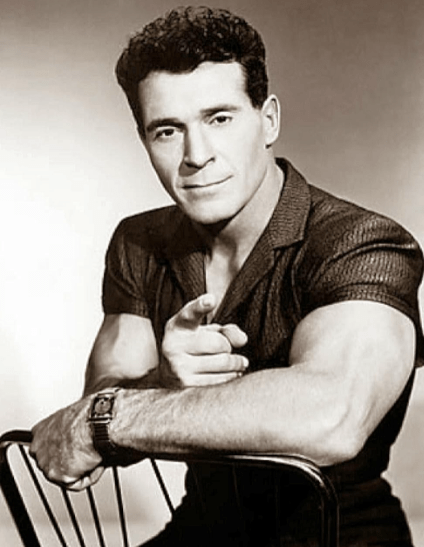
Long before exercise physiology was formalized, Jack LaLanne was already setting the stage culturally.
In the 1950s and 60s, when strength training was still viewed with suspicion and exercise was not part of mainstream medical advice, LaLanne was telling Americans to move their bodies, lift weights, and take responsibility for their physical health. He was tireless, charismatic, and decades ahead of his time. For that, he deserves real credit.
Growing up in post-colonial Singapore, our TV station often purchased old American programs for broadcast. Somewhere between cartoons and the news, Jack Lalanne would come on and do his jumping jacks. I loved watching him (emphasis on ‘watched’–I wasn’t crazy enough to jump around myself in the humid tropical heat). Our favourite part was his signature closing song, which he sang to the tune of O Sole Mio. My brothers and I would listen to his lovely tenor and watch his dogs roam about the studio happily as he sang. I didn’t know much about America then (England being the Centre of the Empire and where our post-colonial focus was still directed), but he represented the kindest and best of America.
One line he used to say about exercise was something to the effect of:
You know you’re doing it right if you’re a little sore every day.
When I heard this in my younger days, I took it seriously (have you seen how fit he looked in those photos? Who wouldn’t take him seriously???) In its historical context, the idea made sense. At a time when most people were profoundly sedentary, any physical stimulus was adaptive. Mild soreness was a proxy for novelty, effort, and engagement. It reassured people that they had done something, that the body had been challenged.
For years I had this principle in my mind. I’d be concerned if I didn’t feel the after-effects of my workout too much and would double-down on the next session, or add another session later in the day. I was wary of “rest days” because I figured we were too sedentary to even qualify for “rest days”!
What We Know Now
We now understand that soreness is not a reliable marker of effective training.
Delayed-onset muscle soreness (DOMS) reflects:
- microstructural disruption
- inflammatory signaling
- sensitization of nociceptors
It does not reliably track:
- strength gains
- neuromuscular adaptation
- muscle protein synthesis
- long-term functional improvement
In fact, persistent daily soreness often signals the opposite:
- incomplete immune resolution
- excessive eccentric damage
- impaired neuromuscular recovery
- rising anabolic resistance
The body interprets repeated unresolved soreness not as “good work,” but as ongoing threat.
The Modern Reframe
Today, we judge training quality less by how much it hurts and more by how well it resolves.
Signs you are doing it right now include:
- strength that returns predictably
- movement that feels cleaner over time
- decreasing need to brace or compensate
- soreness that appears occasionally, not chronically
- a body that feels available to train again
Progress is no longer measured by how much you can tolerate.
It is measured by how well your system adapts.
Honoring the Pioneer while Updating the Principle
Jack LaLanne helped a generation understand that effort matters.
Modern physiology adds the next layer: Effort only counts if the body can interpret it, repair and integrate it. Soreness can happen, but chasing it is no longer the goal.
And I’m still not too keen on those jumping jacks!!!
2. In each session, choose one primary movement.
A primary movement is:
- a compound, multi-joint action
- capable of generating meaningful force
- repeatable with consistent technique

Examples:
- Squat or sit-to-stand variation
- Deadlift or hip hinge
- Press (bench, overhead, push-up)
- Pull (row, pull-down, pull-up)
One movement = one message.
Multiple movements fragment intent:
- motor units are recruited and abandoned before patterns consolidate
- immune signals overlap
- connective tissue strain becomes diffuse rather than instructive
This week, clarity matters more than coverage.
What to notice:
Improved movement clarity within the session. Less cognitive load deciding what comes next. A sense that effort is being “received” rather than scattered.
3. Perform 2–3 working sets of that movement.
A working set is a set that requires focus and effort — not a warm-up, not a test.
Reps:
- Use a load that allows ~6–10 controlled reps
- Rep speed should naturally slow by the end of the set
Rest between sets:
- 2–3 minutes
- Enough to restore coordination, not adrenaline
Below two sets, the body may not register the signal.
Beyond three sets, fatigue begins to dominate meaning.
Two to three sets live in the window where:
- effort is unmistakable
- damage remains containable
- recovery can complete before the next session
More work here is not louder — it’s just noisier.
What to notice:
Strength that feels reproducible across sets rather than deteriorating. A sense of completion rather than depletion at the end of the session.
4. Stop every set at technical fatigue — not physiological failure.
Technical fatigue refers to the loss of coordinated force production, not depletion of contractile capacity.
At the point where technique degrades:
- motor unit firing becomes asynchronous
- rate coding declines
- intermuscular coordination deteriorates
- stabilizers over-recruit to preserve output
During exercise, technical fatigue = the first loss of:
- coordination
- timing
- smooth force transfer
You STOP when:
- bar path degrades
- bracing replaces movement
- tempo collapses
- you could complete another rep, but it would be sloppy
Physiological failure (true inability to complete a rep) is not the goal this week.
Crucially, technical failure occurs while a substantial proportion of muscle fibers remain capable of generating force. In most individuals, 40–50% of peripheral contractile capacity remains at the point of technical fatigue.
This phenomenon reflects central (neural) fatigue, not muscular exhaustion.
Neural fatigue: what it is and why it appears early
Neural fatigue arises from:
- reduced corticospinal excitability
- altered motor cortex output
- inhibitory afferent feedback from group III/IV muscle afferents
- neurotransmitter depletion at the neuromuscular junction
- protective down-regulation of motor drive
Its function is protective and adaptive.
Neural fatigue:
- prevents excessive peripheral damage
- limits calcium overload
- preserves synaptic integrity at the NMJ
- enforces movement precision over raw output
Training past this point does not recruit “more muscle.”
It trains compensation, bracing, and inefficient motor strategies.
Neural adaptation vs neural fatigue
Neural adaptation occurs when:
- force is generated cleanly
- motor units are recruited efficiently
- timing and sequencing improve
- inhibitory reflexes recalibrate
Neural fatigue occurs when:
- coordination is sacrificed for output
- protective inhibition dominates
- the nervous system shifts from optimization to defense
This week is devoted to neural adaptation, not neural depletion.
Training past technical fatigue:
- increases calcium leakage
- degrades NMJ signaling
- recruits compensatory motor patterns
- activates protective catabolic pathways
Therefore:
- Beginners stop early to avoid encoding poor motor patterns
- Advanced trainees stop early because their neural systems fatigue faster and more profoundly
Clean force trains the nervous system.
Grinding trains avoidance.
This week, clean force matters more than maximal force.
What to notice:
A clear internal sense of “that was enough.” Less shaking, fewer sloppy last reps, and better movement recall the following session.
5. Add no extra volume — but do stay physically active.
Training is a signal.
Movement is context.
Additional resistance volume (finishers, accessory stacking, “just one more” sets):
- extends inflammatory signaling beyond the adaptive window
- delays macrophage transition from inflammatory to reparative phenotypes
- increases connective tissue strain without improving force transmission
- amplifies neural fatigue without improving neural adaptation
By contrast, low-intensity movement:
- enhances lymphatic clearance
- improves perfusion
- supports parasympathetic tone
- accelerates immune resolution
“No extra volume” means:
- no finishers
- no bonus sets
- no accessories done out of habit or guilt
But this is not a prescription for inactivity.
Walking, gentle mobility, and non-fatiguing movement do not compete with recovery. They enable it. Finishers extend inflammatory signaling and delay immune resolution. Low-intensity movement supports circulation, lymphatic flow, and autonomic balance.
Remember: adaptation needs movement but can be compromised by excess strain.
What to notice:
Movement outside training feels restorative rather than effortful. Reduced stiffness the day after training rather than cumulative soreness.
6. Keep sleep and wake time within ±30 minutes every day.
The organism encodes sleep primarily through circadian phase alignment, not duration alone.
Consistent timing:
- stabilizes hypothalamic–pituitary–adrenal (HPA) signaling
- synchronizes nocturnal growth hormone pulses
- coordinates immune cell trafficking and resolution
- supports mitochondrial repair and protein synthesis
Circadian disruption ( even with adequate total sleep):
- prolongs inflammatory cytokine elevation
- worsens insulin sensitivity
- increases anabolic resistance
- impairs motor learning
Sleep as Performance Infrastructure (Real-World Examples)
Elite sport treats sleep as infrastructure.

Manchester United (Premier League, UK)
Under Sir Alex Ferguson and later performance directors, Manchester United implemented strict sleep hygiene protocols, including enforced curfews before matches and during training blocks. Players were monitored for sleep duration and consistency, not just total hours. Late-night media and social obligations were deliberately limited before competition days.
Real Madrid (La Liga, Spain)
Real Madrid’s performance staff have long emphasized circadian alignment, especially during Champions League travel. Sleep timing, not just duration, is prioritized, with late kick-off schedules followed by delayed but consistent sleep–wake cycles the following day to preserve rhythm rather than force early rising.
FC Barcelona (La Masia Academy)
At the youth academy level, lights-out policies are enforced not as discipline, but as performance protection. Training schedules are built around sleep timing, not the reverse. This is one reason young athletes show unusually rapid motor learning and coordination refinement.
NBA — San Antonio Spurs
Under Gregg Popovich, the Spurs became known for aggressive load management and sleep protection. Team flights, practice times, and media schedules were adjusted to minimize circadian disruption. Players were encouraged to prioritize sleep regularity over optional training volume.
NBA — LeBron James
LeBron James has publicly stated that he prioritizes 8–10 hours of sleep nightly, with consistent bedtimes and naps treated as part of his training regimen. Sleep is not framed as recovery from training, but as a prerequisite for decision-making, reaction time, and injury prevention.
NFL — Seattle Seahawks
Pete Carroll integrated sleep education and circadian awareness into team culture, working with sleep specialists to emphasize consistent sleep timing, especially during travel and short turnaround weeks. Sleep deprivation was treated as a performance risk factor comparable to poor conditioning.
Olympic Programs (UK Sport & Australian Institute of Sport)
Both UK Sport and the Australian Institute of Sport employ dedicated sleep scientists. Athletes are given individualized sleep–wake prescriptions, and training loads are reduced when sleep regularity deteriorates, even if training metrics look “good.”
What these systems understand
Sleep timing is enforced not because athletes lack discipline, but because circadian misalignment degrades motor learning, immune resolution, and neural efficiency long before it shows up as injury.
Sleep regularity is not a wellness preference but a structural requirement for elite performance.
As outlined above, professional teams across soccer, basketball, American football, and Olympic sport enforce sleep timing with the same seriousness they enforce training plans. Lights-out policies, circadian-aligned travel schedules, and protected sleep windows are not optional wellness add-ons; they are structural components of performance systems.
What is striking is how little of this logic survives when athletic practices are translated into the recreational fitness world.
The U.S. Recreational Fitness Paradox
Modern fitness culture encourages people to train like athletes:
- lift heavy
- train frequently
- push intensity
- chase fatigue
But it almost entirely ignores the other half of the athletic equation:
- enforced sleep timing
- circadian protection
- recovery-first scheduling
- load reduction when sleep is compromised
People are taught how to copy an athlete’s workouts, not an athlete’s infrastructure.
The result is predictable:
- training volume increases
- sleep becomes irregular
- recovery debt accumulates
- adaptation stalls
- frustration is misinterpreted as lack of discipline
This is not because people are lazy but because the system being copied is incomplete.
Why This Matters Even More With Age and Sarcopenia
In younger athletes, poor sleep timing degrades performance.
In older adults, it blocks adaptation entirely.
With aging:
- immune resolution slows
- anabolic signaling becomes more context-dependent
- neuromuscular recovery takes longer
- baseline inflammation rises
Sarcopenia is not simply muscle loss. It is reduced margin for error.
In this context, irregular sleep timing:
- prolongs inflammatory signaling
- worsens anabolic resistance
- impairs motor learning
- increases injury risk
- turns strength training into repeated stress without return
For older adults, training without sleep regularity is not just “suboptimal.” It is often counterproductive.
The Reframe
Elite athletes do not adapt because they train more. They adapt because their systems are protected enough to respond. Strength training without sleep infrastructure is imitation without context. For those concerned with muscle preservation, function, and independence, especially in midlife and beyond, sleep timing is not ancillary. It is the path to healthy adaptation.
What to notice:
More predictable morning energy. Reduced “wired but tired” sensations. A narrowing gap between time in bed and time asleep.
7. Schedule protein intake across the day.
Protein availability needs structure, not good intentions.
Muscle protein synthesis is a pulse-driven process, not a cumulative daily tally. Without scheduled intake, most people unintentionally cluster protein into one late meal, leaving long catabolic gaps earlier in the day when muscle is most receptive to anabolic signaling.
For this reason, protein intake should be explicitly scheduled, not left to hunger cues or convenience.
Operational guidance:
- Set alarms or calendar reminders for meals.
- Aim for protein exposure every ~3–4 hours while awake.
- Do not attempt to “catch up” later if a meal is missed.
This is not about micromanaging grams. but about establishing the reliability of signal delivery.
From a physiological standpoint, evenly spaced protein intake:
- reduces per-meal anabolic resistance
- improves efficiency of muscle protein synthesis
- minimizes prolonged glucagon-dominant catabolic periods
- supports repair signaling throughout the day
From a behavioral standpoint, scheduling:
- removes decision fatigue
- prevents accidental underfeeding
- converts intention into execution
My years of clinical experience have shown that when protein is not scheduled, it doesn’t reliably happen, especially in older adults, busy professionals, and those already experiencing sarcopenia (i.e. everyone who needs it the most!)
What to notice:
Reduced end-of-day urgency around food. More stable energy across the day. Less reliance on oversized evening meals to compensate for missed intake earlier.
8. Take one daily parasympathetic break (10–20 minutes).
Parasympathetic activation is a biological requirement for repair, not a psychological preference.
Vagal signaling:
- suppresses pro-inflammatory cytokine production
- lowers background cortisol
- facilitates macrophage phenotypic switching
- restores neuromuscular readiness
- stabilizes autonomic variability
This is prescribed tuning of your physiology, not “self-care”. It should be as embedded in your life as brushing your teeth.
Options include:
- quiet walking
- seated stillness
- slow nasal breathing
Slow Breathing as a Parasympathetic Signal
Slow breathing (Resonance Frequency Breathing/RFB, to be precise) at approximately 6 breaths per minute has been shown to:
- increase vagal tone
- improve heart rate variability
- reduce sympathetic dominance
- modulate inflammatory signaling

Mechanism:
Prolonged exhalation increases baroreceptor engagement, enhancing vagal afferent signaling to the brainstem and shifting autonomic balance toward parasympathetic dominance.
Execution:
- nasal inhalation ~4 seconds
- slow exhalation ~6 seconds (nasal)
- no breath holding
- no imagery or effort
Ten minutes daily (set a timer) produces measurable autonomic effects.Inconsistency negates them.
What to notice:
A shift from agitation to quiet alertness. Faster down-regulation after stress. Improved sleep onset.
9. Do not compensate for anything you miss.
No FOMO, no making up:
- missed workouts
- missed sleep
- missed recovery
Compensation stacks stress without restoring signal.
It teaches urgency which leads to bracing, a sign of eroded trust.
Stacking missed training, sleep, or recovery:
- compresses stress signals
- prevents immune resolution
- reinforces urgency and vigilance
- degrades signal interpretability
Consistency, not punishment, is what the organism responds to.
What to notice:
Reduced anxiety around “falling behind.” Greater ease returning to the plan after disruption.
A Different Kind of Pep Talk
Expect this week to feel unfamiliar.
Restlessness is common.
Often this reflects:
- sympathetic tone becoming visible
- habit withdrawal masquerading as anxiety
- the nervous system noticing silence
This is not regression. You’re starting to tune into your body again (maybe for the first time as an adult!)
Do not evaluate progress yet.
Progress requires:
- interpretation
- resolution
- decision
This week restores interpretation. Strength comes later.
Understand what breaks if this step is skipped.
Without signal clarity:
- coordination cannot refine
- recovery cannot consolidate
- effort compounds resistance
- overreaching slides quietly into chronicity
This week is not the destination. Take notes, observe. Learn how you tick. Wisdom and effective action comes from knowing yourself. Don’t half-ass it.
Here’s Jack to sing us out:
References
- Enoka, R. M., & Duchateau, J. (2016). Translating fatigue to human performance. Medicine & Science in Sports & Exercise, 48(11), 2228–2238.
- Gandevia, S. C. (2001). Spinal and supraspinal factors in human muscle fatigue. Physiological Reviews, 81(4), 1725–1789.
- Folland, J. P., & Williams, A. G. (2007). The adaptations to strength training: Morphological and neurological contributions. Sports Medicine, 37(2), 145–168.
- Sale, D. G. (1988). Neural adaptation to resistance training. Medicine & Science in Sports & Exercise, 20(5 Suppl), S135–S145.
- Schoenfeld, B. J., Grgic, J., Ogborn, D., & Krieger, J. W. (2017). Strength and hypertrophy adaptations between low- vs. high-load resistance training. Journal of Strength and Conditioning Research, 31(12), 3508–3523.
- Helms, E. R., Cronin, J., Storey, A., & Zourdos, M. C. (2016). Application of the repetitions in reserve-based rating of perceived exertion scale. Strength and Conditioning Journal, 38(4), 42–49.
- Pedersen, B. K., & Febbraio, M. A. (2008). Muscle as an endocrine organ: Focus on muscle-derived IL-6. Physiological Reviews, 88(4), 1379–1406.
- Pedersen, B. K. (2019). Anti-inflammatory effects of exercise: Role in diabetes and cardiovascular disease. European Journal of Clinical Investigation, 49(5), e13131.
- Gleeson, M. (2007). Immune function in sport and exercise. Journal of Applied Physiology, 103(2), 693–699.
- Meeusen, R., et al. (2013). Prevention, diagnosis, and treatment of the overtraining syndrome. European Journal of Sport Science, 13(1), 1–24.
- Lehmann, M. J., et al. (1998). Training-overtraining: A prospective, experimental study. International Journal of Sports Medicine, 19(1), 57–66.
- Plews, D. J., Laursen, P. B., Stanley, J., Kilding, A. E., & Buchheit, M. (2013). Training adaptation and heart rate variability in elite endurance athletes. European Journal of Applied Physiology, 113(2), 372–384.
- Walker, M. P. (2017). Why We Sleep. Scribner.
- Dattilo, M., Antunes, H. K. M., Medeiros, A., et al. (2011). Sleep and muscle recovery: Endocrinological and molecular basis. Sleep Medicine Reviews, 15(3), 211–222.
- Knowles, O. E., et al. (2018). Inadequate sleep and muscle strength: Implications for resistance training. Sports Medicine, 48(2), 327–338.
- Simpson, N. S., Gibbs, E. L., & Matheson, G. O. (2017). Optimizing sleep to maximize performance. British Journal of Sports Medicine, 51(5), 356–363.
- Lehrer, P. M., Vaschillo, E., & Vaschillo, B. (2000). Resonant frequency biofeedback training to increase cardiac variability. Applied Psychophysiology and Biofeedback, 25(3), 177–191.
- Russo, M. A., et al. (2017). Slow breathing improves baroreflex sensitivity and heart rate variability. Frontiers in Human Neuroscience, 11, 353.
- Laborde, S., Mosley, E., & Thayer, J. F. (2017). Heart rate variability and cardiac vagal tone in psychophysiological research. Frontiers in Psychology, 8, 213.
- Moore, D. R., et al. (2012). Protein ingestion to stimulate myofibrillar protein synthesis. American Journal of Clinical Nutrition, 96(4), 944–952.
- Morton, R. W., et al. (2018). A systematic review of protein supplementation on muscle mass and strength. British Journal of Sports Medicine, 52(6), 376–384.
- Cruz-Jentoft, A. J., et al. (2019). Sarcopenia: Revised European consensus on definition and diagnosis (EWGSOP2). Age and Ageing, 48(1), 16–31.
- Larsson, L., Degens, H., Li, M., et al. (2019). Sarcopenia: Aging-related loss of muscle mass and function. Physiological Reviews, 99(1), 427–511.
- Smith, J. (2010). Jack LaLanne: The Godfather of Fitness. Health Communications.
- Todd, J. S., Todd, T. C., & Howe, B. L. (2012). Physical culture and the evolution of fitness ideals. Iron Game History, 12(3), 4–15.
Had a rough week? No time to read everything here? At least listen to Mr. Lalanne’s song and as always you can default to the Life is Short List anytime. Life is for living, after all!
See you next week!

